Case study / FIELDOPTIC / Simulation

Launch, capture, return: testing a warehouse inventory drone.

A PX4/Gazebo prototype that captures images at 12 rack positions, monitors rotor clearance, and returns to an elevated dock.

PX4 · Gazebo · Python / pymavlink · Next.js · TypeScript

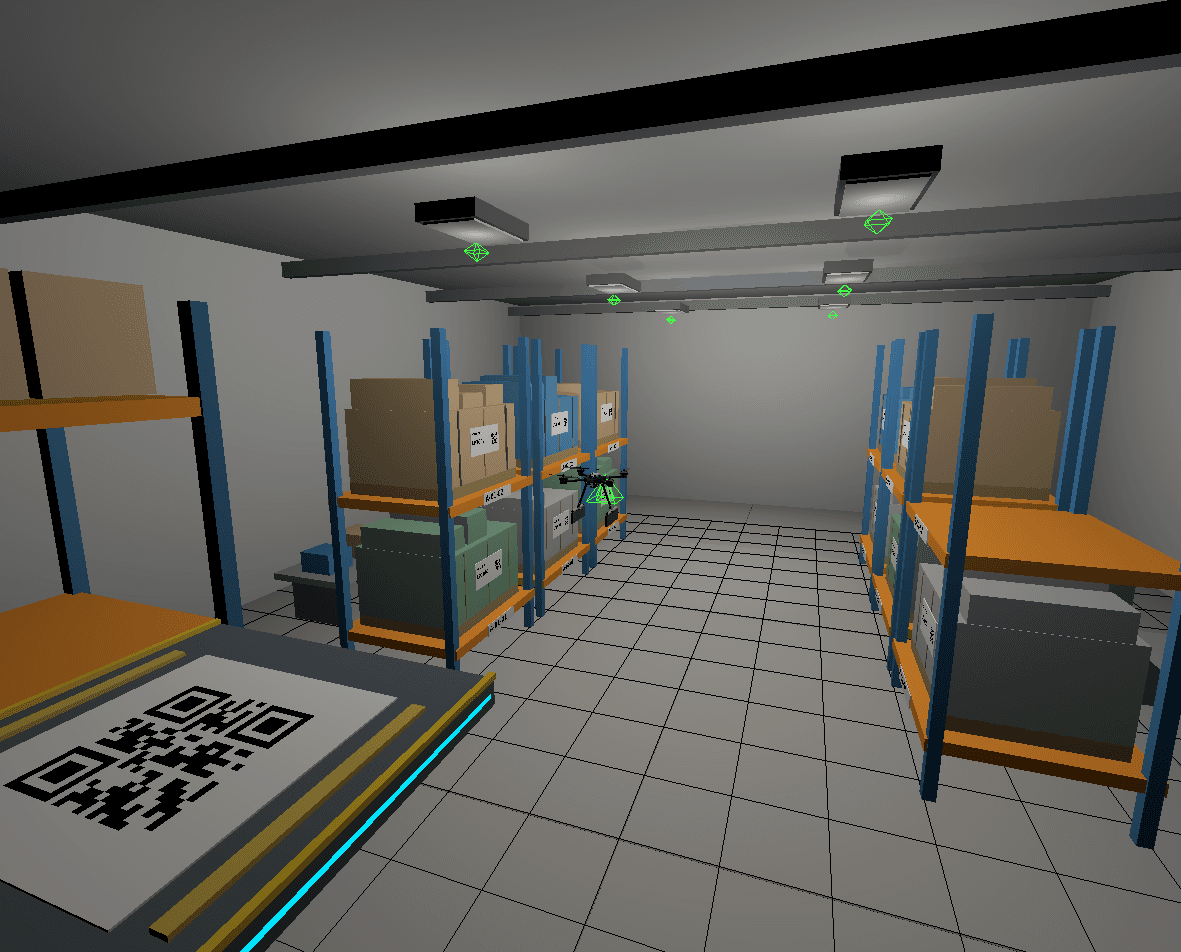
Gazebo warehouse simulation showing a drone entering an aisle between labeled racks and an elevated QR-marked home dock
Gazebo simulation: two rack rows, three bays per row, and two capture levels. All flight results on this page come from simulation.

The problem

An inventory record says where a pallet should be. It does not prove where it was seen. The goal was to collect images at rack positions, suggest label readings, and let a person review the evidence before reconciling it with warehouse records.

The approach

A PX4-controlled drone launches from an elevated dock, settles at 12 inspection positions, captures timestamped images, then returns and lands. A separate monitor checks rotor clearance and contacts. The inventory app keeps expected stock, observed evidence, and human confirmation separate.

Two failures that improved the system.

Fix the geometry, keep the requirement.

The original landing gear left only 26.85 cm between the rotor envelope and dock, below the 30 cm requirement. I added 80 mm of skid stand-off and updated mass, inertia, and home height together. The clearance requirement stayed unchanged.
Stop when monitoring becomes stale.

A Windows/WSL file-sharing error interrupted a repeat run after seven captures. The controller rejected stale monitoring data. The fix added unique temporary files and bounded sharing-error retries while preserving timestamps and the 0.8-second freshness limit. The failed trial remains part of the record.

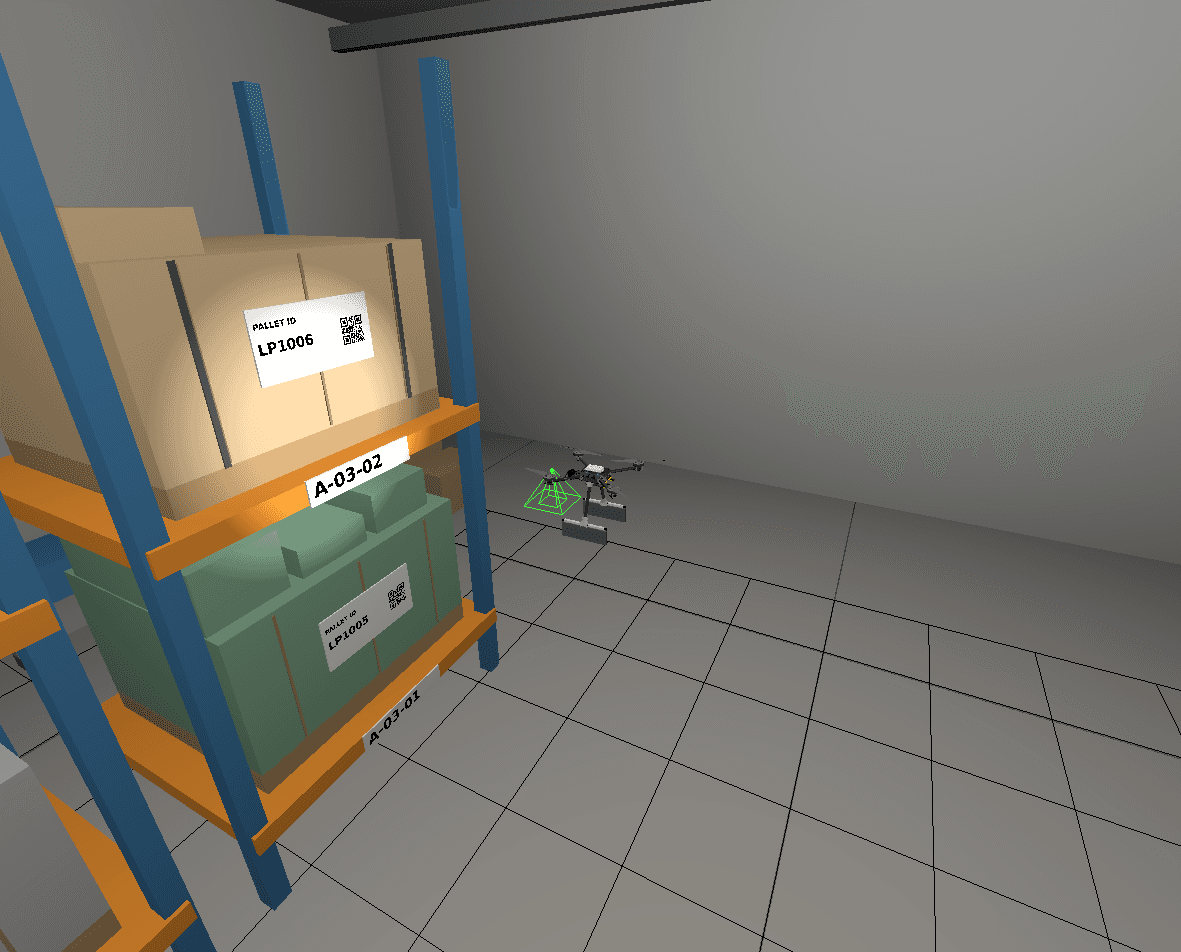
Simulated drone inspecting an upper warehouse rack position with its spotlight illuminating a pallet label
Capture: rendered camera evidence at a rack position. Reaching the target is not the same as reading or confirming its label.
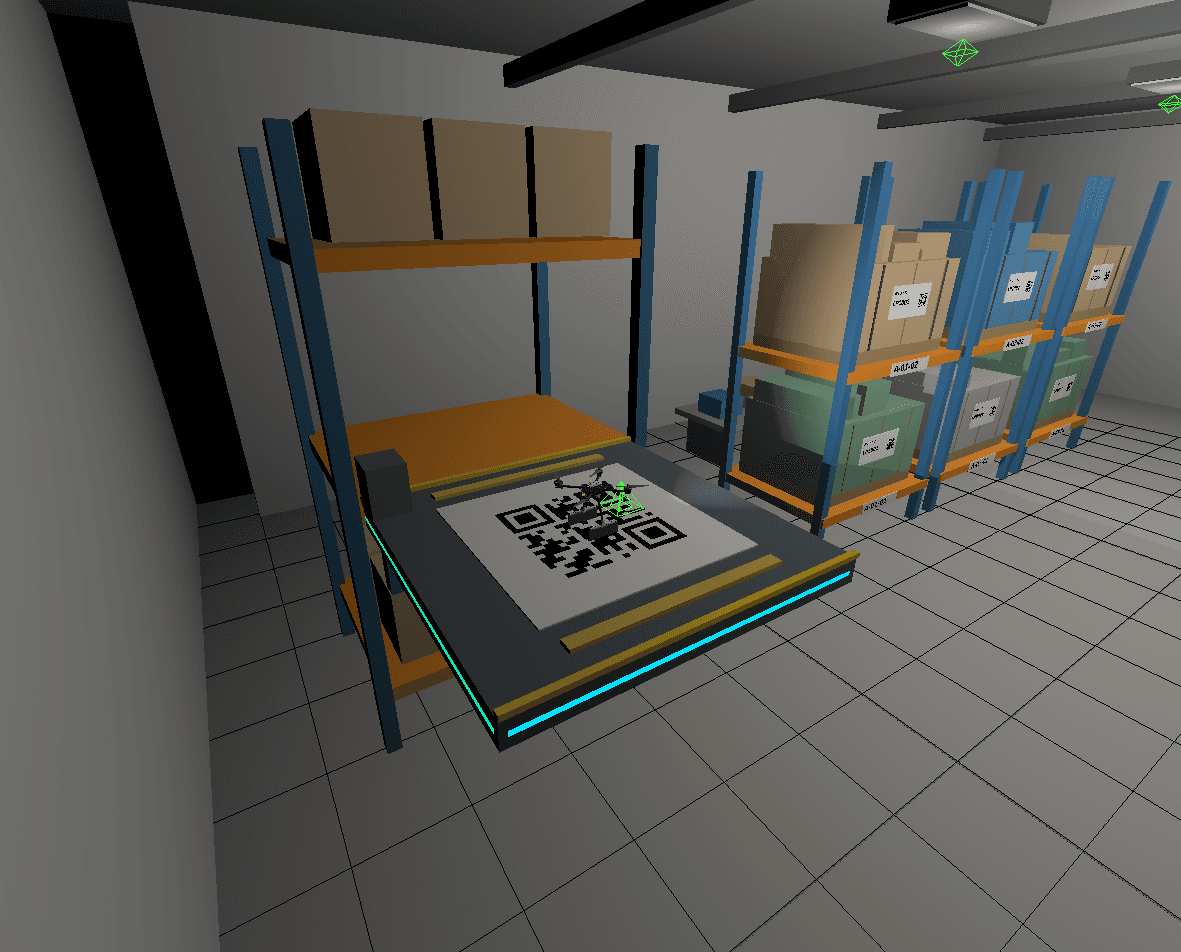
Simulated drone landed on its elevated QR-marked rack dock after returning from the inspection route
Return: coordinate-guided landing, disarm, and stationary dwell. The home QR is identified from pixels; it does not steer the landing.

Three fresh starts. One frozen configuration.

On October 20, 2026, three consecutive fresh-start missions passed with identical source/configuration hashes and initial PX4 parameters. Every run captured all 12 rack positions, recorded zero prohibited contacts, and returned to a stationary, disarmed landing.

Final simulated mission results, series FT09-20261020-103737
TrialCapturesMin. clearance*Dock error
0112 / 1234.84 cm5.03 cm
0212 / 1234.91 cm9.36 cm
0312 / 1234.73 cm5.37 cm

*Conservative sampled rotor-clearance lower bound. Lowest result: 4.73 cm above the 30 cm requirement.

The project reports 17 passing regression tests. A separate Windows/WSL file-lock fixture exercised recovery and stale-read rejection; it was not a flight fault-injection test.

Current scope

Repeatable nominal flight and evidence capture in a frozen simulated warehouse. Final flights were archived without importing or confirming inventory; label-reading accuracy remains separate qualification work.

The prototype uses simulated GNSS and coordinate-guided landing.

← Back to projectsProject context & evidence ↗